Liquid R News
Discover Your Ceramic Coating Car Protection Options
Ceramic Coating Car Protection Options
Ceramic coating has earned its popularity: long-lasting protection and a glossy finish are hard to argue with. Before you book a ceramic coating, know what the options are. They are not all the same product.
The Ceramic Coating Options Available To You
There are really only two kinds of ceramic coating: commercial ceramic coating at professional grade, and DIY nano ceramic coating at retail grade. Both lay down a protective nano coating, but the cost and the preparation time sit far apart. Ceramic coatings took off with professional detailers first and have only recently become affordable for DIYers, and not all ceramic coatings are made to the same standard.
Professional Grade Ceramic Coating
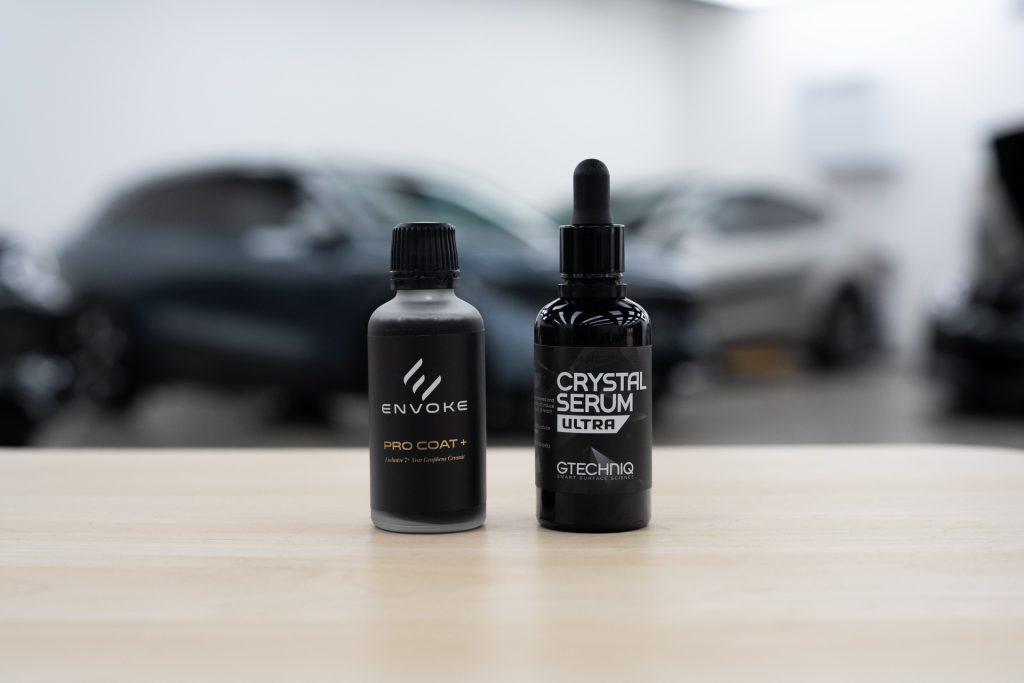
A professional grade product like Gtechniq has to be applied by trained staff with specialised equipment in a controlled environment, which is where the installation cost comes from. Before the coating ever touches the car, the panels get clay barred, then sprayed with isopropyl alcohol and polished with microfibre, round after round. That prep alone runs to hours of labour.
DIY Nano-Ceramic Coating
Retail grade DIY nano ceramic coatings are built for enthusiasts to apply at home. They will not match professional grade coatings for durability or longevity, but they still put meaningful protection on the paint, and the ready-to-use kits with step-by-step instructions keep them affordable and approachable.
Coating Maintenance
Maintenance differs between the two types of ceramic coatings. Professional grade sealants want periodic touch ups and careful handling to keep their protective properties. Retail options tend to need full reapplication every few years.
Consider Quality Over Price
Read reviews and do your research before settling on a product. Some of the cheaper DIY options actually harm the paint they are meant to protect. Which way you go, commercial or DIY nano ceramic coating, comes down to budget and time and how much protection you want. Either way, ceramic coatings are an excellent way to keep a car sleek and shiny while defending it against UV rays, water spots, road salt chemicals and bird droppings.
Adding Wax or Ceramic Toppers
Wax gives a shine, but it has nowhere near the lasting power of ceramic coating, and it cannot match the protection against scratches and stains. Ceramic coating costs more upfront than waxing. It also ends the cycle of buying and reapplying wax, which is where the maths of ceramic coating starts to win. Do not put wax over a ceramic coating: it blunts the hydrophobic layer and attracts contaminants. For a DIY ceramic coating, regular use of a quality ceramic boost spray is the right maintenance. A professionally applied ceramic coating needs neither a boost spray nor a ceramic topper; the coating holds its protection and hydrophobic behaviour on its own.
So those are your two paths to coating a car with paint protection: a professional grade coating applied by detailers like Liquid R, or the riskier DIY kit. For what actually goes on the car, read Crystal Serum Ultra and graphene coating.
Here is why ceramic coating works so well on cars.
What Does Ceramic Coating Do?
Plenty of owners still ask what ceramic coatings actually are, and whether investing in a ceramic car coating pays off. If you care about your car’s exterior, you have probably heard the claims for ceramic coatings already. There are other ways to guard the paint, retail wax and sealants among them, or standing detailing appointments. Right now, though, ceramic coatings are one of the most effective options for holding gloss and keeping contaminants off. One thing they are not is paint protection film: a ceramic coating will not stop stone chips.
The Benefits Of Ceramic Car Coating
For a showroom shine that survives daily driving, ceramic coatings do the job. They sharpen the paint’s hydrophobic behaviour and defend it at the same time. The advice from automotive experts is to invest in a professional nano ceramic coating rather than the off-the-shelf options at your local auto store, to protect the paint from acid rain, UV sunlight, bird droppings and the rest of it.
How Does Ceramic Coating Car Protection Work?
The main types of coatings are quartz and polymer, plus hybrid coatings that combine the two. All of them bond hard to the car’s surface, shielding it from UV rays and harsh chemicals while resisting scratches. By filling the pores and imperfections in the paint, ceramic coatings leave it glossy and smooth.
Quartz Coating
Quartz coatings, also known as silicon dioxide coatings, are the hardest of the ceramic coatings and give the strongest resistance to scratches and debris. Even after years of abuse, a quartz coating keeps a car looking shiny and fresh. Read aftercare and window tinting for what each one includes.
Hybrid Coating
Hybrid ceramic coatings blend polymer and quartz coatings and are marketed as the best of both worlds: a balanced protective shell around the vehicle. In practice, hybrid coatings are not known to protect any better than straight polymer or quartz ceramic coatings.
Polymer Coating
Polymer, or epoxy, is the most commonly used type of ceramic coating. This coating bonds so strongly with the factory paint that the two effectively become one near permanent layer, which is why ceramic coatings cannot simply be washed away. Machine polishing is the only way to remove polymer coatings. Coverage and pricing sit on colour transformation.
Keep reading for why ceramic coating car protection is so popular, and why so few owners leave their new cars unprotected.
Why Should You Ceramic Coat Your Car?
Ceramic coating earns its keep in several ways. Ceramic coatings add a protective layer to the exterior and bring back that just-bought look, and the coatings manage it by making the car both tougher and easier to clean. Here is why ceramic coatings are worth considering.
Provides UV & Oxidation Protection
Paint that lives in the sun oxidises, and oxidised paint goes dull and faded. Ceramic coatings put a robust layer between the paint and UV, cutting oxidation right down. A ceramic coating also blocks road grime and dirt, along with airborne pollutants, contaminants that do real damage if left on bare paint. Shielded by the coating, the finish keeps its showroom depth far longer.
Your Car Still Needs To Be Washed
Acidic substances in the environment can stain paint with chemical marks. Those pollutants only manage a weak bond to a ceramic coating, because ceramic coatings drop the surface tension so far that dirt, bird droppings, bugs, tar and graffiti struggle to stick. Even so, get pollutants off promptly rather than letting them sit on the coating. Washing is still necessary; with a ceramic coating it just becomes a much quicker job.
Cars Are Easier To Clean
The hydrophobic behaviour is probably the biggest single benefit of ceramic coatings: they repel water outright. Ceramic coat a car and water beads and slides straight off, sheeting away before grime and mud can get a grip on the paint. Whatever does land wipes off with far less work.
Brings Out High Gloss
The nanotechnology does real work here: ceramic nanoparticles fill even the smallest pores in the paint. Applied professionally, that improves how the surface reflects light and gives the colour extra clarity and depth. The gloss is genuinely impressive, and it lets you hold the car’s value and looks without repainting or touching up the exterior.
Cost Effective
Car wax lasts about a month, so the re-waxing never really stops. Ceramic coatings last far longer: nothing to reapply after every wash or bout of harsh weather, and a properly applied, well maintained coating goes a few years before it needs replacing. Against the running cost of sealants and wax, a nano ceramic coating saves money over time. The protection is better too. Ceramic coatings create a hydrophobic surface that repels liquids and holds off staining and UV damage, which means less washing and less detailing down the track.
Related Guides
Contact Us
Get in touch with us or stop on by to say hey
Give us a call or drop by anytime:
P: 1800 985 880
E: info@liquidr.com.au
A: 12/23A Cook Road Mitcham VIC 3132
Opening hours:
8:30am-5:00pm Monday to Friday
8:30am-12:30pm Saturday